

Quick Highlights
👉 Learn about 6 Indian Ayurvedic herbs for dogs and their benefits.
👉 Along with simple dosage suggestions and easy ways to add these herbs to your pup’s daily meals.
Did you know some of the most powerful superfoods for your dog are already sitting in your kitchen?
Indian herbs have been trusted for centuries to support human health, and it turns out that many of them can also be used as natural remedies for dogs. From easing joint pain and boosting digestion to improving immunity and wound healing, these Ayurvedic herbs offer an effective way to support your dog’s overall well-being.
When used thoughtfully in your dog’s meals, the right Ayurvedic herbs for dogs can help prevent everyday health concerns and boost their overall vitality.
In this article, we’ll explore 6 Indian Ayurvedic herbs and spices that are safe and beneficial for dogs, along with suggested dosages and simple ways to add them to your pup’s meals.
Let’s dive in!
- 6 Best Ayurvedic Herbs For Dogs
- Pawsitive Takeaway
- FAQs On Ayurvedic Herbs For Dogs
- What herbs can I put in my dog food?
- What spices are good for dogs with inflammation?
- Can We give jeera water to a dog?
- what can i feed my dog to relieve gas?
- What are the best herbs for dogs with respiratory problems?
- What Are The Best Herbs For Dogs with allergies?
- What are the best herbs for dog's skin?
- Which herbs are good for senior dogs?
- What are the best herbs for a Dog's gut Health?
6 Best Ayurvedic Herbs For Dogs
Here are some Indian herbs for dogs that canine nutritionists recommend for their antioxidant, anti-inflammatory, and antimicrobial benefits.
1. Turmeric
Often called the king of spices, turmeric is a powerful natural healer with a wide range of benefits for dogs. Its star compound, curcumin, is known for its anti-inflammatory, antioxidant, and anti-cancer properties, and there’s plenty of scientific research to support these claims.
Due to its anti-inflammatory properties, turmeric is commonly used in hip and joint supplements. It is alos a beneficial herb for dogs with arthritis. A study conducted at Texas A&M University even found that curcumin helped reduce eye inflammation in dogs suffering from uveitis, a painful and inflammatory eye condition.
But that’s not all. Turmeric also has antimicrobial properties, which may help to prevent skin infections, speed up wound healing, and give your dog’s immune system a natural boost.
How to Add Turmeric to Your Dog’s Diet?
I usually add a pinch of organic turmeric powder with a pinch of black pepper to my dog’s homemade meals. The black pepper improves the absorption of curcumin. I prefer getting it freshly ground from a local store instead of using packaged powders, which may contain added colours or preservatives.
Another great option is to make a paste using turmeric, black pepper and a healthy fat like organic coconut oil; this helps with absorption. You can mix it directly into wet meals or feed it as a treat.
⚠️ Caution
Turmeric is usually safe for dogs when used in moderation. However, excessive consumption may lead to mild digestive issues such as vomiting or diarrhea. It is better to start with a small dose and observe how your dog responds to the herb.
2. Ashwagandha

If you’re in search of a herb for dogs with anxiety, Ashwagandha is the answer to your worries. This powerful Ayurvedic herb is known to help the body adapt to stress. While it’s been used in human wellness for centuries, recent studies suggest it may also benefit dogs dealing with anxiety, inflammation, and age-related issues.
Ashwagandha is best known for its calming effect on the nervous system. So if your dog suffers from separation anxiety, noise phobia (Diwali fireworks or thunder), or general stress, this herb may help them stay more relaxed and balanced.
However, the benefits of Ashwagandha are not just limited to stress relief. With anti-inflammatory and analgesic (pain-relieving) properties, it also supports joint and muscle health, making it useful for active or older dogs. It also helps boost immunity by regulating cortisol levels in our canine friends.
How to Add Ashwagandha to Your Dog’s Diet?
You can find Ashwagandha in powder or capsule form, but always choose pet-safe varieties that are free from additives.
My Rajapalayam dog was prescribed a calming tablet with Ashwagandha as its main ingredient, a month before Diwali, to deal with his noise phobia.
Some natural calming supplements for dogs already include Ashwagandha in balanced doses, which is an easier route for anxious pups! However, to know the exact dose, discuss it with your veterinarian.
⚠️ Caution
Avoid Ashwagandha in dogs with autoimmune diseases, as it may overstimulate the immune system. Also, if your dog is on medication for thyroid or blood pressure, check with your vet before use. Begin gradually with a small dose. Remember to monitor your pup for any signs of digestive upset.
3. Holy Basil (Tulsi)
Tulsi is a well-known, ancient Ayurvedic herb that also acts as a natural medicine for dogs. Known as Holy Basil, this aromatic leaf is packed with natural compounds that help support your dog’s respiratory health, skin, digestion, and immunity.
Tulsi has strong antibacterial, antifungal, and anti-inflammatory properties, making it particularly useful in dogs prone to skin infections or allergies, mild digestive issues, and respiratory troubles.
It’s also known to support detoxification, help regulate blood sugar levels, and promote a sense of calm, making it a well-rounded herb for holistic pet care.
How to Add Tulsi to Your Dog’s Diet?
My Rottweiler used to enjoy munching tulsi leaves from our garden as a pup, and I never observed any digestive issues. So you can add fresh tulsi leaves (2-3, finely chopped) to your dog’s food as well.
Alternatively, you can brew a light tulsi tea (just steep a few leaves in warm water) and pour a teaspoon or two over their meals once cooled.
For skin issues, a mild tulsi water rinse or tulsi-infused oil may help soothe itchy or inflamed skin.
⚠️ Caution
Tulsi is generally safe in moderation, but avoid giving it every day for extended periods, especially to unspayed or pregnant female dogs, as it may affect their hormone balance. Always check the dosage with your vet and lookout for digestive issues.
4. Moringa
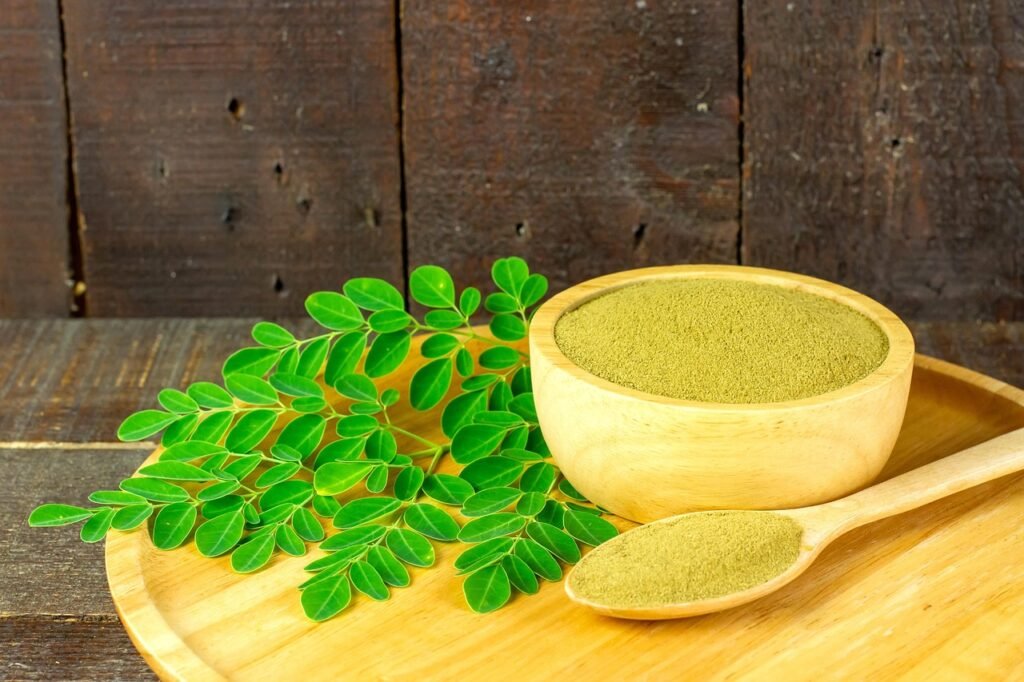
Often called the drumstick tree, Moringa is a nutritional powerhouse for both humans and dogs alike. Its leaves are loaded with essential vitamins (A, C, and E), minerals, amino acids, and antioxidants, making it a great natural supplement to support your pup’s overall health.
Moringa is also one of the best sources of plant protein. Further, being packed with natural anti-inflammatory and analgesic properties, it improves joint health. Moringa is also a beneficial herb for dogs with arthritis. And it also helps to boost the immune system, thus promoting long-term wellness.
This herb can be especially helpful for picky eaters who may be missing out on key nutrients. Moringa also supports healthy digestion and liver function, making it a great addition to your dog’s diet in small, consistent doses.
How to Add Moringa to Your Dog’s Diet?
To improve my Rottweiler’s joint health, I often boil a couple of raw leaves with a pinch of turmeric powder and add them to his homemade meals. And I’ve noticed a visible improvement in his gait.
Some dog food brands and supplements also include moringa for its dense nutrient profile. These are great options if you’re unsure about raw dosing.
Personal Note🐾
Organic moringa powder, while safe, is quite bitter due to its concentrated form and might not be appetising when added to your pup’s meal. This is why I usually stick to fresh leaves or moringa herbal dog supplements.
⚠️ Caution
Like other herbs, moringa should be introduced gradually. Too much can cause loose stools in some dogs since it has mild laxative benefits. Avoid feeding raw seeds or pods, as they may be too harsh for canine digestion. Stick to fresh/ dried leaves only.
5. Ginger
Apart from being an Indian kitchen staple, Ginger is a fantastic herb for dogs, especially when it comes to digestion, bloating, and nausea. It has natural anti-inflammatory, anti-nausea, and antioxidant properties that can soothe stomach upsets, reduce gas, and even help dogs prone to motion sickness during travel.
Many pet parents also use ginger to support senior dogs with mild arthritis, as it may help reduce inflammation and improve circulation. Its warming nature can be especially comforting for dogs who feel stiff or sluggish during colder months.
How to Add Ginger to Your Dog’s Diet?
You can add a small amount of freshly grated ginger to your dog’s meals. Make sure it’s plain and free from added salt, sugar, or preservatives. For small dogs, a tiny pinch is enough, while medium to large dogs can have about 1/4 teaspoon. Start small and adjust based on your dog’s response.
⚠️ Caution
Ginger is generally a safe herb for dogs in small quantities, but too much can cause digestive upset. If your dog is on medications, especially for diabetes, heart conditions, or blood pressure, consult your vet before use. Avoid ginger in dogs with bleeding disorders or those scheduled for surgery, as it has blood-thinning properties.
6. Jeera (Cumin)
Jeera is another Indian kitchen staple that doubles as a gentle, effective herb for dogs. It’s especially helpful for digestion, gas, acidity, and mild stomach discomfort.
Cumin naturally contains anti-inflammatory, antioxidant, and antimicrobial properties, making it useful for dogs who experience occasional bloating, indigestion, or sluggish digestion after meals.
How to Add Jeera to Your Dog’s Diet?
I usually add 1/4 teaspoon of jeera (cumin) as a whole spice to my dog’s homemade meals. However, you can also lightly roast and powder it and add a small pinch to your pup’s meal.
⚠️ Caution
Jeera is generally a safe herb for dogs in tiny quantities, but too much can irritate the stomach. Avoid giving cumin to dogs with chronic liver issues unless a vet approves, as it may mildly stimulate digestive activity. If your dog is pregnant, has severe acidity, or is on long-term medications, consult your vet before introducing jeera. Always start slow and observe your dog for any unusual reactions.
Pawsitive Takeaway
Natural herbs are a great alternative to modern medicine as they are capable of healing our pups with mild to no side effects. From boosting immunity to easing digestion and inflammation, each of these ingredients brings something valuable to the bowl. However, it is better to gradually increase the dosage after carefully observing your pup’s response. And when in doubt, don’t hesitate to check with your vet.
FAQs On Ayurvedic Herbs For Dogs
What herbs can I put in my dog food?
You can add dog-safe herbs like turmeric, ginger, jeera (cumin), tulsi, ashwagandha, and moringa to your dog’s meals in small amounts. These herbs support digestion, immunity, and general well-being.
What spices are good for dogs with inflammation?
Dog-safe anti-inflammatory spices include turmeric, ginger, and a tiny amount of cinnamon. These spices contain natural compounds like curcumin and gingerol that help reduce joint stiffness, support mobility, and ease mild inflammation. Always introduce new spices in small amounts and check with your vet for the correct dosage.
Can We give jeera water to a dog?
Yes, you can give jeera water to dogs in small amounts. Lightly boiled and cooled cumin water can help with gas, bloating, and mild indigestion. Always introduce it slowly and avoid giving it to dogs with chronic liver issues unless a vet approves.
what can i feed my dog to relieve gas?
A tiny pinch of freshly grated ginger or a small amount of roasted jeera (cumin) powder can help relieve gas in dogs. Both support digestion and reduce bloating when used in very small, dog-safe amounts.
What are the best herbs for dogs with respiratory problems?
Holy basil (tulsi) and ginger are two dog-safe herbs that may support respiratory health. Tulsi helps soothe the airways, ease coughing, and support immunity, while ginger can reduce throat irritation and help with inflammation. Always use very small amounts and check with your vet if your dog has chronic breathing issues.
What Are The Best Herbs For Dogs with allergies?
Turmeric and ashwagandha are two safe herbs for dogs that may help with allergies. Turmeric contains curcumin, which has natural anti-inflammatory and antihistamine properties that can reduce itchiness and skin irritation. Ashwagandha helps support immunity and may calm stress-related flare-ups. Always use small, controlled amounts and check with your vet if your dog has chronic or severe allergies.
What are the best herbs for dog’s skin?
Turmeric is one of the best herbs for a dog’s skin. Its natural anti-inflammatory and antioxidant properties can help soothe irritation and support skin healing. Giving turmeric with a little coconut oil can boost its antimicrobial properties, aid absorption and make it easier to mix into meals.
Which herbs are good for senior dogs?
Turmeric, ashwagandha, and moringa are great herbs for senior dogs. Turmeric supports joint comfort, while ashwagandha helps with stress and also offers anti-inflammatory, pain-relieving benefits for joints and muscles. Moringa is rich in natural nutrients that support overall joint health. Always use small amounts and consult your vet for senior dogs with medical issues.
What are the best herbs for a Dog’s gut Health?
Ginger and jeera (cumin) are two of the best herbs for a dog’s gut health. Ginger helps soothe nausea, bloating, and indigestion, while jeera supports smoother digestion and reduces gas. If you’d like more natural ways to improve your dog’s gut, check out my article on the best prebiotic and probiotic foods for dogs in India.